
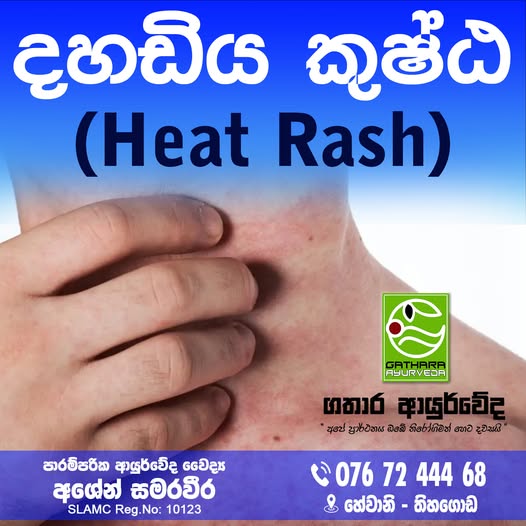
🔴 HEAT RASH / SWEAT RASH 🔴
🔵 What is Heat Rash?
Heat rash is a common skin condition that occurs when sweat becomes trapped within blocked sweat ducts, preventing it from reaching the surface of the skin. This can result in small red bumps, spots, or tiny blisters.
Heat rash is more common in hot and humid climates and often develops in areas where there is limited airflow or where skin rubs against skin.
It is also known as:
👉🏻 Heat Rash
👉🏻 Prickly Heat
👉🏻 Sweat Rash
👉🏻 Miliaria
🔵 Who Can Develop Heat Rash?
Heat rash can affect anyone. However, babies and young children are more susceptible because their sweat glands and ducts are not yet fully developed.
People living in hot, humid climates and those who engage in activities that cause excessive sweating, such as athletes, may also be at greater risk.
🔵 Symptoms & Appearance
Heat rash may appear as clusters of small red bumps or tiny blisters, often around 1–2 mm in size. The surrounding skin may appear red or, depending on the skin tone, darker or purplish.
It may cause:
👉🏻 Itching
👉🏻 A prickling or burning sensation
👉🏻 Skin irritation
👉🏻 Occasionally, discomfort or pain
🔵 Where Does Heat Rash Commonly Occur?
Heat rash can develop anywhere on the body but is particularly common in skin folds and areas where skin comes into contact with skin.
Common areas include:
👉🏻 Arms and legs
👉🏻 Neck
👉🏻 Buttocks
👉🏻 Armpits
👉🏻 Groin
👉🏻 Under the breasts
👉🏻 Inner thighs
It can also occur in areas where clothing remains in prolonged contact with the skin, such as around the waistband of trousers.
Heat rash is less commonly seen on the face.
🔵 Is Heat Rash Contagious?
No. Heat rash is not contagious. It is not caused by a bacteria or virus that spreads from person to person.
However, the rash can appear over a larger area of the body when sweat ducts remain blocked, particularly in areas where tight clothing traps heat and moisture.
🔵 What Causes Heat Rash?
Heat rash occurs when the narrow sweat ducts that carry sweat to the surface of the skin become blocked.
The trapped sweat can cause irritation and inflammation, resulting in the characteristic rash.
Factors that may contribute to blocked sweat ducts include:
👉🏻 Accumulation of dead skin cells and skin secretions
👉🏻 Excessive sweating between the skin and clothing
👉🏻 Blockage around hair follicles
👉🏻 Hormonal changes
👉🏻 Limited airflow between the skin and clothing
👉🏻 Prolonged exposure to hot and humid conditions
🔵 How Can Heat Rash Be Prevented?
You can reduce the risk of heat rash by:
👉🏻 Wearing loose, lightweight clothing that reduces friction against the skin
👉🏻 Choosing breathable cotton clothing and avoiding fabrics that trap heat and moisture
👉🏻 Staying in cool, well-ventilated or air-conditioned environments when possible
👉🏻 Keeping the body cool and dry
👉🏻 Drinking plenty of water to stay hydrated
👉🏻 Avoiding excessive physical activity in very hot or humid conditions
🔵 What Can You Do If You Develop Heat Rash?
Heat rash may cause itching, irritation, or sometimes discomfort. It often improves within a few days.
Keeping the affected area cool, dry and well-ventilated can help the skin recover.
👉🏻 Avoid scratching the affected area.
👉🏻 Avoid excessive heat and sweating.
👉🏻 Avoid heavy creams or powders that may further block sweat ducts.
👉🏻 Wear loose and breathable clothing.
✅ During periods of high temperatures, make sure to drink plenty of water, stay cool and avoid prolonged exposure to direct sunlight.
Traditional Ayurvedic Doctor
Ashen Samaraweera
Want treatment suited to your own needs?
Book a consultation